Grid Storage Solution Provision
The "Power to Store" Supporting Next-Generation Power Infrastructure Achieving Both Stable Supply and Decarbonization
About Grid Storage
Energy price fluctuations, renewable energy ratio expansion, BCP response. LE System provides one-stop support for energy storage introduction and operation from "grid-scale" to "facility-level (self-consumption)".
1. What is Grid Storage Battery?
Grid storage refers to a system that directly connects and operates large-capacity battery energy storage systems (BESS) to the power grid for various purposes including stable operation of transmission and distribution networks, expansion of renewable energy adoption, and trading in electricity markets. In the modern era where renewable energy generation from solar and wind power, which are affected by weather conditions, is increasing, these systems are expected to play a role as "adjustment capacity" to maintain the balance between electricity supply and demand. Grid storage batteries contribute to optimizing the entire power system as next-generation energy infrastructure by charging when electricity is cheap and discharging when it is expensive or during shortage periods.
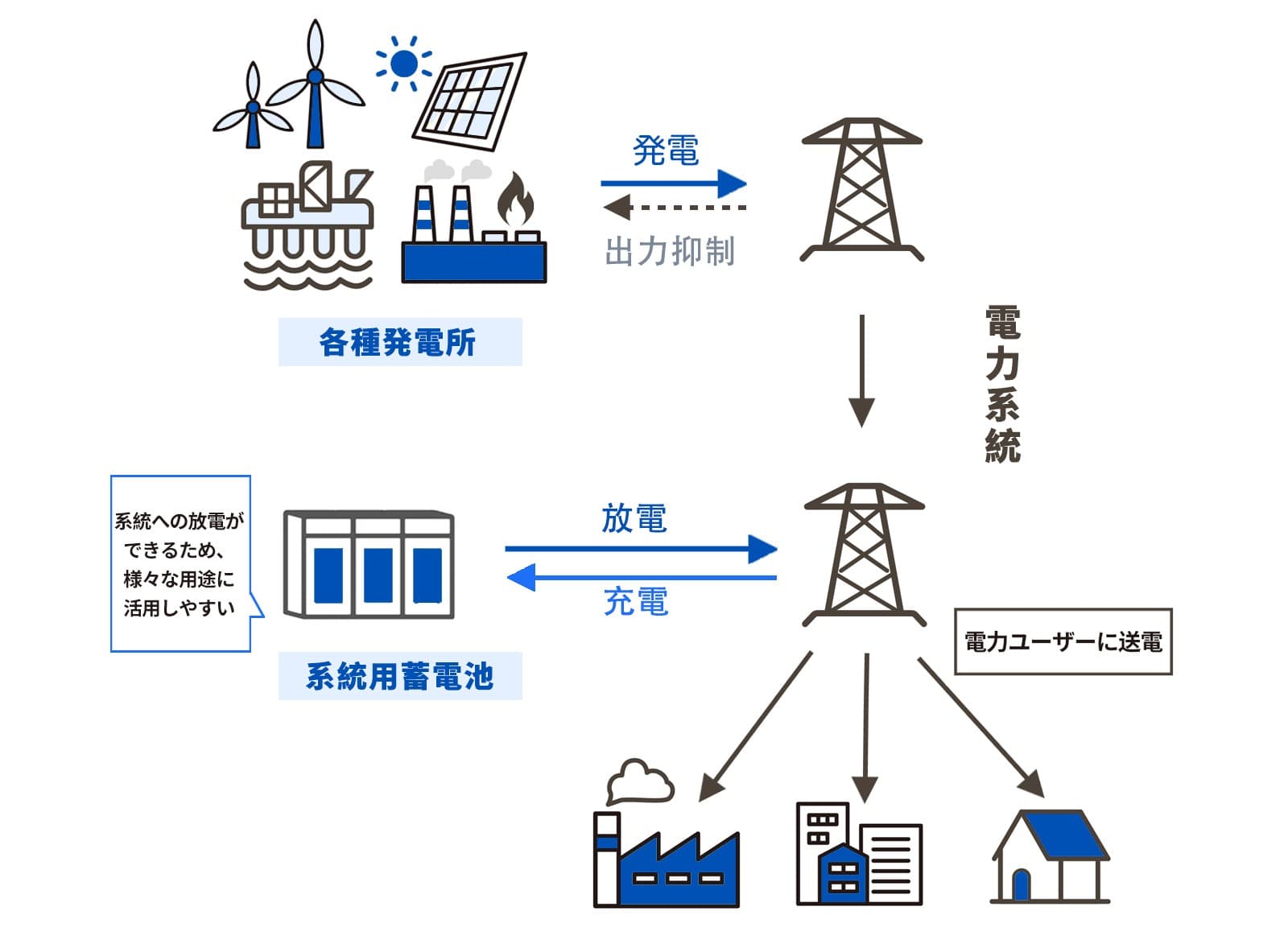
In the Power System
Generation must always equal demand.
When power plants generate surplus electricity → Storage batteries charge
When demand increases and supply is insufficient → Storage batteries discharge
Grid Storage (Grid-oriented)
Purpose: Stabilization and efficiency of the entire power system through power market trading and frequency maintenance
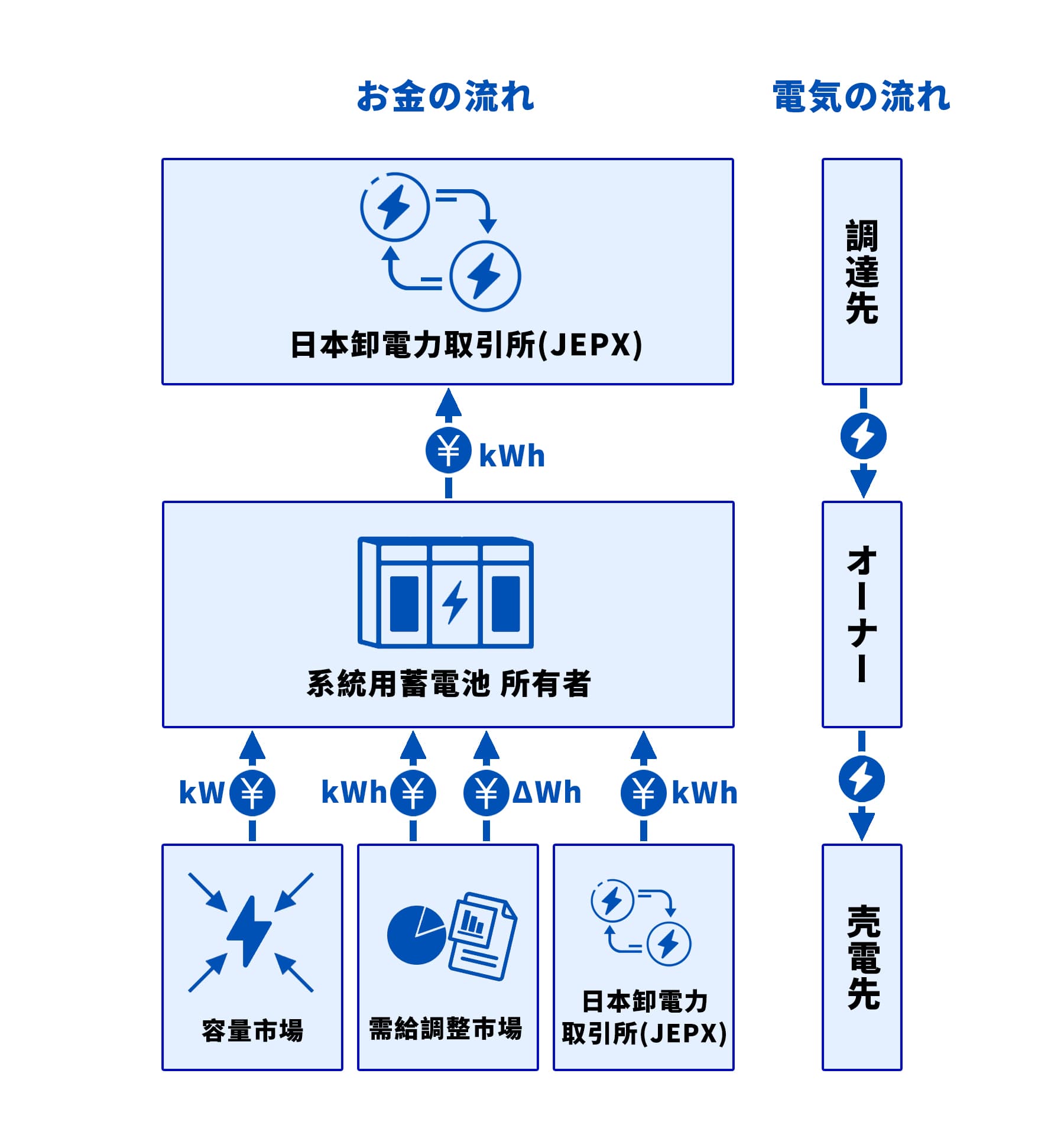
Price differential profit (arbitrage) in wholesale power market (JEPX)
Provision of adjustment capacity in supply-demand adjustment market (ΔkW value)
Compensation for supply capacity assurance in capacity market (kW value)
2. Grid Storage Business Model (Three Revenue Sources)
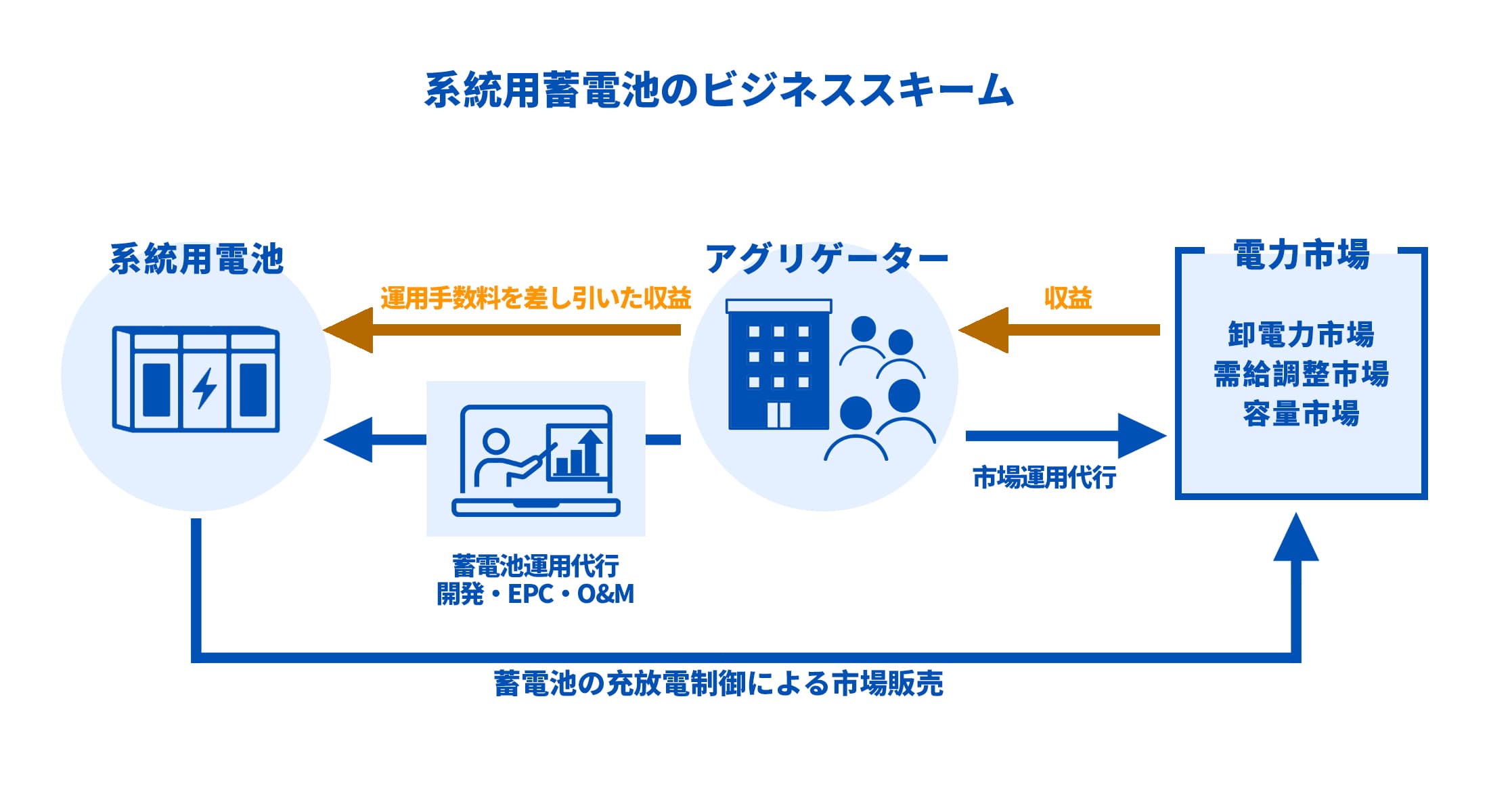
Grid storage business revenue is primarily generated through participation in three different electricity markets. By strategically utilizing the unique roles and revenue characteristics of each market, it is possible to achieve stable and maximized returns.
Market Name
Role & Revenue Model
Features
Demand-Supply Adjustment Market
Provides "adjustment capacity" to stabilize the frequency and voltage of the power system. As ΔkW (delta kilowatt) value, being in a ready state (standby) to discharge at any time generates revenue, and the actual discharged electricity (kWh) also becomes revenue as kWh value.
・The most stable and core revenue market ・Revenue is generated just by being on standby without actual discharge
Wholesale Electricity Market (JEPX)
Japan's only wholesale electricity trading market. Revenue is generated from the price difference (margin) by charging during low electricity price periods and discharging/selling during high price periods (arbitrage trading).
・Requires analytical skills to predict electricity price fluctuations ・Revenue opportunities expand through coordination with demand-supply adjustment market
Capacity Market
A market to secure future (4 years later) power supply capacity (kW). Trades the supply capacity of storage batteries to obtain long-term fixed income. Equipment of 10MW or more can also participate in "Long-term Decarbonization Power Source Auction".
・Becomes a long-term stable revenue source ・Makes business planning easier by pre-selling supply capacity for 4 years later
3. Business Development Process & Key Considerations
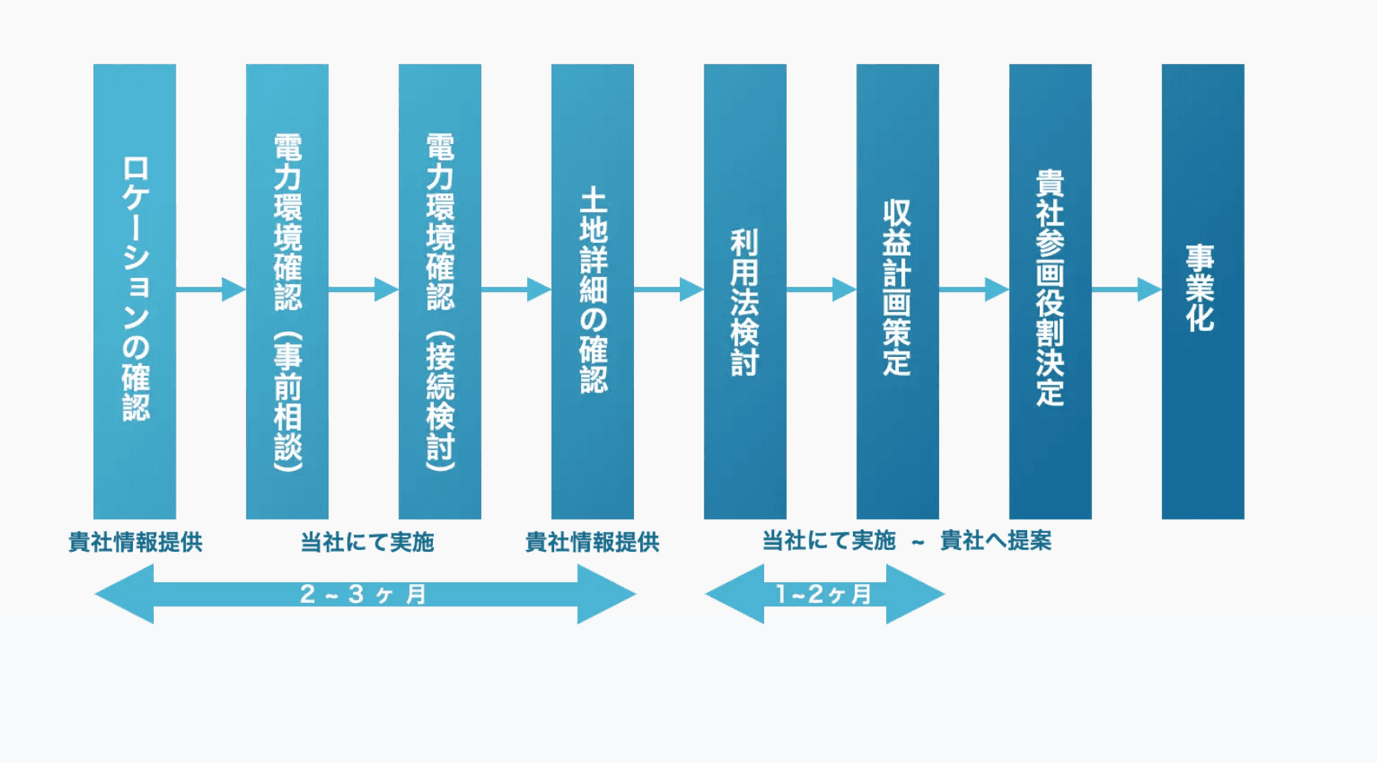
Grid storage business development requires a phased approach from site selection to complex negotiations with power companies and revenue planning. Accurate judgment at each stage determines the success or failure of the project.
Step A|Location Assessment
Evaluate optimal candidate sites based on professional expertise, including ease of grid connection (distance to transmission lines, neighboring residents' situation, etc.), required area (approximately 500㎡ or more), and low disaster risk.
Step B|Power Environment Assessment (Preliminary Consultation)
Conduct preliminary consultation with the power company that manages the candidate site regarding connection. While optional, understanding technical challenges and connection possibilities at this stage enables smoother subsequent processes.
Step C|Power Environment Assessment (Connection Study)
Apply for connection study with the power company. Grid capacity and technical requirements are examined in detail, and construction content, costs, and timeline required for interconnection are presented. These results become crucial material for judging project feasibility.
Step D|Detailed Land Assessment
Conduct detailed surveys on legal rights and ground conditions to make final confirmation of the land's suitability as a business site.
Step E|Usage Planning & Revenue Model Development
Perform detailed revenue simulation based on connection study results and analysis of electricity market trends. This concretizes the investment recovery period and overall business profitability.
Step F|Client Participation Role Decision → Implementation Phase
Determine the client's participation format based on the business plan. LE System establishes the optimal framework to guide clients to project success and transitions to the implementation phase.
4. Our Ecosystem
The success of grid storage business requires extensive expertise and networks across multiple areas including land development, grid interconnection, material procurement, market operation (aggregation), and maintenance management (O&M). However, it is not easy to assemble all these specialists in-house and drive projects forward.
We, LE System, are an electrolyte manufacturer at the heart of battery technology. Based on our deep knowledge of this core technology, we have built a robust ecosystem with partner companies that are top runners in their respective fields.
Customers do not need to spend time on complex vendor selection and negotiations. We serve as the project hub, providing one-stop services from land exploration, development of profitable business plans, various application procedures, optimal battery system construction, to operation and maintenance.
Value provided by LE System's ecosystem:
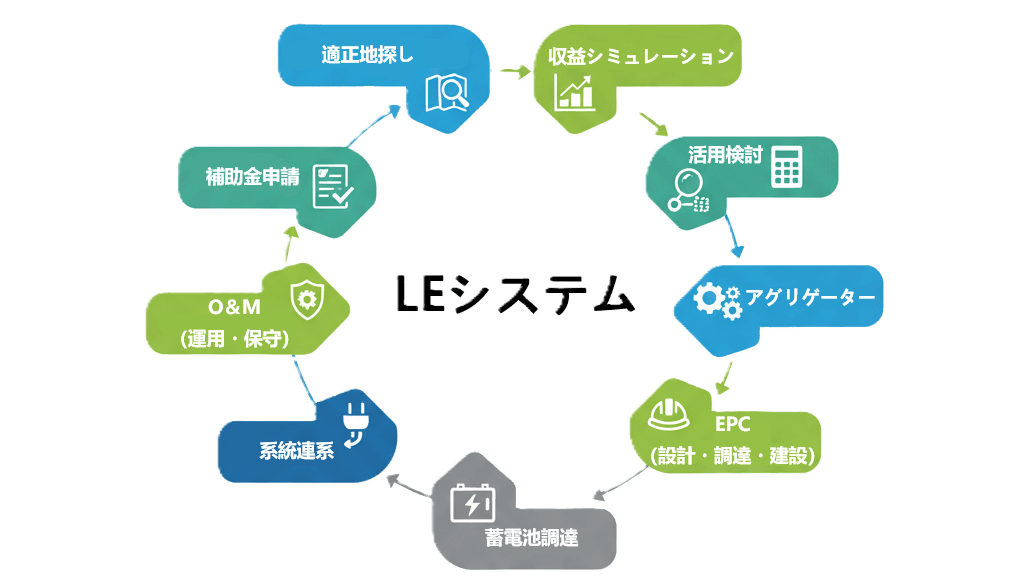
A "package solution" that combines system design capable of maximizing battery performance - only possible as an electrolyte manufacturer - with execution capabilities by professionals in each field. This is the completely new form of grid storage business that LE System provides.
5. Request Materials & Consultation
If you are interested in the possibilities of grid storage business and LE System's ecosystem, please feel free to contact us. We will provide more detailed information tailored to your specific situation.